Wednesday, June 3, 2020

WHEN THERE ARE NO ALLIES

We all saw the video.  We have seen the tweets.  We have seen the other social media posts.  Young black players on the WTA and ATP Tour calling out racism. Using their platforms to stand with the family of George Floyd and other persons who have been subject to police brutality in America causing their deaths. 

What we have not seen are the white allies.  Tennis is a global sport.  Many of the persons who have made women's tennis as popular as it is right now are persons of colour.  The highest paid female athlete in the world as reported by Forbes, is a 22 year old woman of colour, Naomi Osaka.  A young woman whose father is Haitian and whose mother is Japanese.  If anyone knows the struggle of race it is without a doubt this young woman.  Naomi has not only used her social media presence of millions of followers to make a statement but she has literally gone outside to join protesters in the fight for justice.  

Young Coco Gauff, just turned 16 years old, using her platform to not only bring awareness to the struggle of being black, but not backing down from calling out her white peers for their insensitivity.  Osaka has done the same thing. 

White tennis players, both current and former players have shown just what they value most.  Lisa Raymond's tweet about property, without even pretending to understand the reason behind it says it all.  Lisa Raymond, a lesbian and someone who apparently has no issue in calling out property destruction but clearly draws the line at standing for something.  Anything.  

What galls me the most is the absolute silence from the great thinkers in our sport.  From the ones who write columns like Pete Bodo, Christopher Clarey and others, the silence from those who cover this sport is deafening.  

I went through the social media of various journalists and commentators and while the list is not exhaustive, this is what I found: 

Christopher Clarey - pictures of how much he is missing Roland Garros this year 
Darren Cahill - Australian football with a slight nod to a video and a comment about "things calming down" (note to Darren, they have not)
Pete Bodo - absolutely  nothing worth repeating 
WTA - absolutely nothing but they did RT the Francis Tiafoe video so I guess that is something
ATP - following the WTA, they also did nothing but RT Francis Tiafoe's video with the same message. 

Who says that both Tours don't communicate?

On #BlackOutTuesday, Federer, Nadal, Djokovic and Thiem tweeted black screens apparently in support of BlackoutTuesday.  I guess they felt that they had done enough.  The women on the other hand couldn't be bothered to even pretend to care. 

We have always known that racism exists in tennis circles.  It is apparent in the way how players of colour are and were covered and it is apparent that during this time, tennis has not changed.  Even a review of the social media platforms of the Grand Slams shows nothing of consequence in standing in solidarity with the black players who make up part of the Tour.  It is appalling to me as a person of colour who supports tennis by subscribing to the various media platforms, I am angry that these organisations do not think it worth their while to offer some amount of support to players who are standing against a system that continues to marginalise them. 

The anger and disappointment that I am feeling right now makes me sad as what tennis has done is that it has once again proven to me that when the time comes for it to stand for something, it literally stands for nothing. 

Wednesday, March 11, 2020

WHEN TENNIS SHOWS ITS UGLY SIDE

The Spin Team 

Tennis has always been a selfish sport.  Decisions that are made are never in the best interests of the players, but are always in terms of how to make money.  After all tennis is a business first and foremost and no one goes into business with the aim of losing money.  I have no quarrel with that. 

The decision by the tournament organisers to cancel the BNP Paribas Open ("Indian Wells") a day before the start of the qualifying tournament says as much about the organisers as it does about the sport itself.  Indian Wells is a tournament that for some reason decided to brand itself as the Fifth Slam (not sure how that came about as Miami has always been that for many fans, but I digress).  It is a tournament that has seen large structural changes and the tweets on social media about the changes to the tournament have always flooded not only my timeline but mainstream media as well. 

The decision to cancel the tournament as a result of the detection of coronavirus in an individual in the Coachella Valley was met with the usual selfishness by many.  While many are of the view that the tournament could have made this decision earlier, having regard to players already on site practising etc, the fact remains that the COVID-19 virus is still a moving target and many businesses are not only watching developments but putting contingency plans in place should there be an outbreak amongst staff.   While some would say that it is easy to do that, it is not.  

Only this week, in my own organisation, business travels are being cancelled and directives have gone out that persons should cancel non-essential personal travel.  While this may be easy for individuals, sporting organisations have a much tougher task as they have to consider the various moving parts before taking action. 

Consider that quite a few players on both the ATP and WTA Tours are from Italy.  That whole country is now on lock down mode with many sporting events being cancelled.  Consider whether players who reign from that country, have not been tested, comingle with their colleagues in the locker rooms, on the practice courts, and on the stadium courts.  That is an epidemic waiting to happen. 

I have seen tweets from players and coaches who are of the view that the tournament could have continued minus fans.  Seriously? How about some consideration for the lines people, umpires, locker room attendants, tv people who have to be on sight to show these matches, what about them and their families?

A familiar sight whenever I watch tennis matches is the constant blowing of noses by tennis players.  It is something that I hate to see as sometimes noses are blown and wiped on towels which are then handed to ball kids.  Sometimes tissue is used and not every player takes that tissue and stuffs it into their racquet bags.  A player with a sneeze or cough that then handles a ball with their bare hands is a walking lab of contagion.  Who would want to be exposed to that?

We are being told that we need to constantly wash our hands with soap and water and where that is not available we are to use hand sanitizers.  For those who believe that the Indian Wells tournament could have gone ahead, are you saying that facilities should be placed on site so that players use hand sanitizers or wash their hands before handling balls before serves etc?  

As players travel from country to country and from tournament to tournament they pick up all kinds of bugs.  There are those players who travel with their whole families and I am sure will not take the risk of exposing their children to a virus such as COVID-19. 

*As the Tour moves to Miami (where that tournament is scheduled to begin, a fact which I doubt will happen), then the elephant in the room looms.  Clay season.  Already we have seen that many events are being cancelled in Spain and Italy.  The virus is spreading across Europe and that puts in doubt events such as the French Open and Wimbledon.  Japan is of the view that the Olympics will go ahead but no one is optimistic that it will actually go ahead and even if it does, it won't be the summer Olympics. 

It is time that tennis realises, that for good or ill, at some point it will have to press the pause button rather than play. 

*The Miami Open has now been cancelled 

Saturday, February 22, 2020

CLIJSTERS IS BACK ... AGAIN

So Clijsters is back on Tour and already the articles describing her return as welcome and classy etc have begun circulating.  The commentators I understand are beside themselves in describing just how wonderful it is to see her back and what she will bring to the Tour. 

It never fails to amaze me how a player who has never done much in the way of promoting the WTA Tour is always looked at as the person who brings so much benefit to the WTA Tour. I can never understand why this is, but apparently this is tennis and has always been tennis and will continue to be tennis. 

Many people compare Serena's penchant for talking up the fact that she is a mother and how she finds it inspiring as similar to how Clijsters was when she returned to the Tour for the second (or maybe third time).  The difference though is that Serena has used her platform to:

  • change the WTA's policy on rankings and pregnancy, and maternity leave; 
  • inspire conversations regarding health care for women, and in particular minority women; 
  • with her husband ignited a conversation on paid parental leave;
Clijsters, on the other hand  used her role as a mother to decry the long never ending tennis season.  She constantly talked about the fact that she just wanted to be home with her children and family and bemoaned the many injuries that sidelined her. If other articles are to be believed, apparently staying at home as a wife and mother was not fulfilling enough.  Go figure. 

I have never understood why Clijsters who never failed to show up at a tournament as if the nets were in her backyard,  and who made millions from playing every tournament imaginable,  while at the same time complaining about tennis, is held up as the epitome of class and apparently, the saviour of the WTA.  It is even worse, as I understand it that she has not only returned, but returned looking very much out of shape. I am not entirely sure what strikes them as classy about a complainer. 

Comparisons have been made about the success of Clijsters in her first return and Serena's when she returned from maternity leave.  The difference for those who know is that Serena was still lactating (i.e. breastfeeding), while Clijsters had been away for 2 years and had a toddler who was walking and talking.  The fact that many are saying it took Serena 2 years to win a title, when it only took Clijsters a few months in her comeback is the type of ridiculous and shortsighted commentary that Clijsters inspires. 

Clijsters believes that she can return to the WTA Tour and possibly dominate.  It would be a monumental slap in the face of all those young women who have been working hard to achieve their dreams and to support the WTA Tour, if Clijsters is allowed to have numerous wildcards, rise in the rankings, and pick and choose any  elite tournaments to enter. How does that strike anyone as fair?

There are many more deserving women out there who are struggling with their careers who could benefit from these wild cards.  We need only look at the qualifying draw in Dubai to see the list of players who had to play qualifying (Julia Georges, Carla Suarez-Navarro [final year on Tour], Mladenovic, Kasatkina, Hseih to name but a few of the players who had to play qualifying ).  The fact that Clijsters, as well as Sharapova, do not need to work for them should be a key talking point for those who cover the WTA.

I truly hope that Clijsters loses every single match and that retirement will come calling once again.  This time for good. 

Saturday, January 25, 2020

A Tale of 2 Retirements

by The Spin Team


Women's tennis has always been about beautiful women.

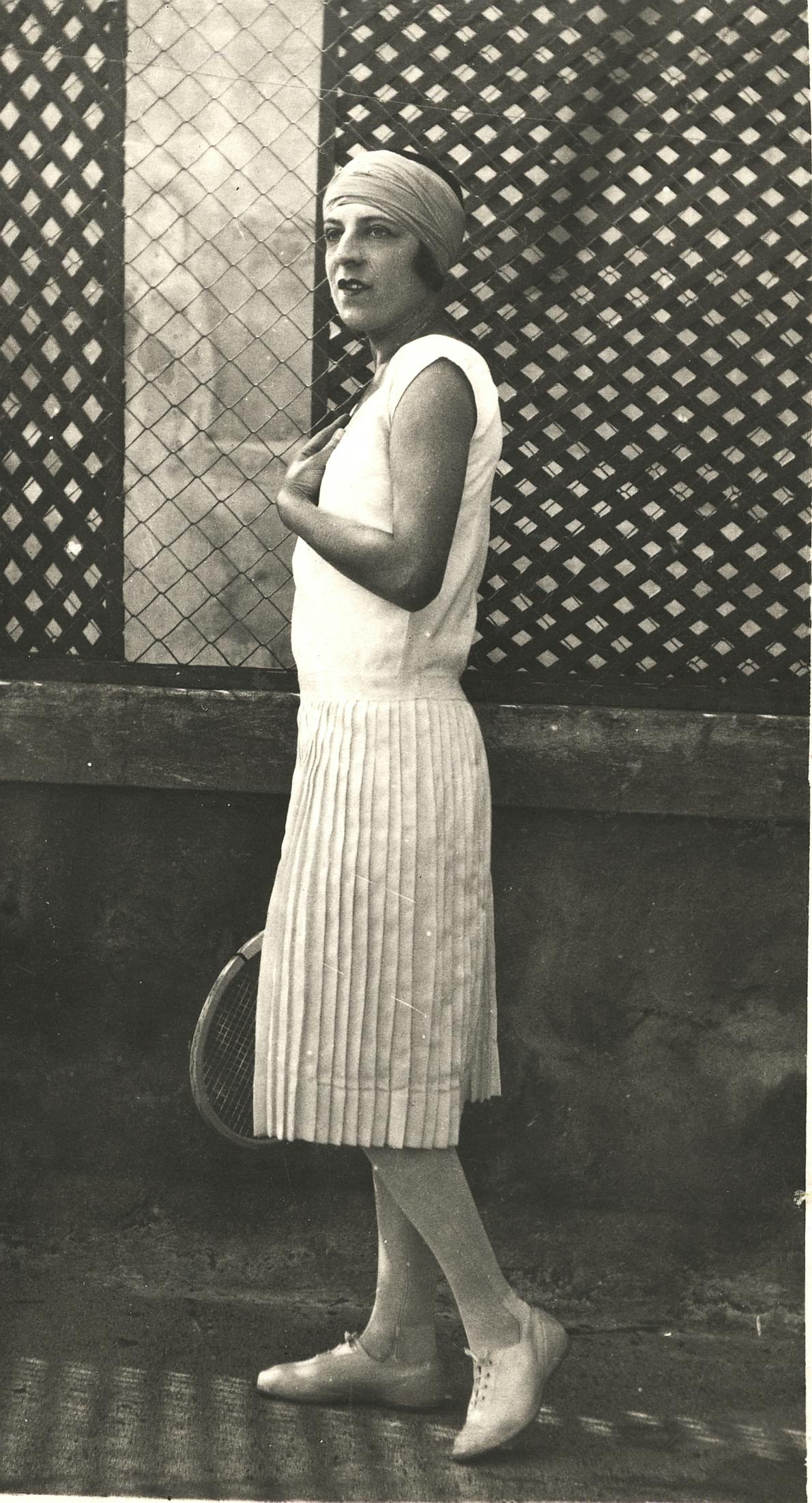
Before the open era, women like Suzanne Lenglen were noted more for the clothes that they wore and what they did off the court.  Stories were told of Lenglen's penchant for drinking brandy and there are articles that described her as a diva.  Lenglen was beautiful and she was very in your face with the way she behaved on court, as well as how she dressed to play matches.  There are numerous articles that talk about Suzanne Lenglen, and rightly so, as she accomplished much on court.  However, the media's relentless obsession with style over substance has carried over into the Open Era of tennis. There have been numerous articles written about the way that certain players are covered, as compared to their opponents.

Image result for suzanne lenglen
Suzanne Lenglen

When the Open Era arrived, the stories focused on Chris Evert, as the newly created WTA Tour believed she had the star power they needed to succeed. She was cute, blonde and pretty and she could play tennis. Yet, she was never up to the standard of a Rosie Casalis or indeed a Billie Jean King. There were stories that Chris Evert did not wish to be associated with an organization that was distinctly gay.

Fast forward to the present and who among us can forget how Sharapova, after her back to back wins against Serena, was elevated to superstar status. Years after that triumph at Wimbledon, pundits are at pains to paint her as a player recovering from injuries, rather than a player who had been banned for systemic doping and whose aura of invisibility has been scraped away for the whole world to see.

When Ana Ivanovic retired from the sport, the WTA hosted a send off party at the scene of her lone triumphant Grand Slam victory at Roland Garros.  I wondered why that was even necessary seeing that Ivanovic had retired to the joys of matrimony and was now seeking to start a new chapter in her life. There have been many players who have retired, some with many more Grand Slam titles than Ivanovic, and I can't seem to recall a ceremony being held in their honour.  Justine Henin comes readily to mind.

At the beginning of the 2020 season, Caroline Wozniacki and Carla Suarez-Navarro both announced that this year would be their final year on Tour.  Wozniacki would retire after the Australian Open, the scene of her lone Grand Slam win.  Suarez-Navarro would no doubt play the whole season and possibly retire at the end of the Asian swing (I assume).  However, both women played their final matches at the Australian Open, but it was only one player, Caroline, that got the WTA send off treatment with tributes from fellow players and an on court interview. 
Suarez-Navarro has had some of her biggest wins at the Australian Open.  It was there that she defeated Venus Williams in 2009 to make the quarters, a feat that she repeated on 2 other occasisons in 2016 and again in 2018.  While she may not have won a Grand Slam, Suarez-Navarro has been one of the more gratifying players to watch on Tour.  If you are a tennis purist, as some commentators like to style themselves, you would have been fascinated with her one handed backhand which she used with brutal precision to take down opponents who were much stronger and had bigger weapons than she did.

Suarez-Navarro was one of the unsung heroes of the WTA.  A steady player with a workmanlike focus, Carla was really too nice for professional tennis.  She was not given to outbursts on court and even when her one time doubles partner, Garbine Muguruza hit it big and no longer needed Carla and made some very scathing comments in the media, Carla did not rise to the challenge of responding in kind.  For a sport that likes to describe players as classy, it has treated one of the classiest players on Tour with a degree of callousness that I have not seen in a long time.

Contrast that to the outpouring of love and affection for Ms. Sunshine herself (a name actually coined by the media), Caroline Wozniacki.  Ons Jabeur, who I believe is the lone female player on Tour from her native Tunisia wins a battle for the decade to make her way into the second week of a Major for the very first time. However, that achievement was virtually overshadowed by an on court interview of Wozniacki, followed by video tributes and a celebration by her family. 


The WTA's blueprint has not changed since that moment when Billie Jean King and 8 other women formed this association.  They have believed, and still do, that in order to sell this sport, you need players who are tall, thin, attractive, blonde, smile prettily for the cameras and are classy (whatever the hell that means).

I have been an avid fan of women's tennis since 1999.  I have seen and heard how players who do not follow the script as it relates to their behavior are sold down by the river by the media (with the blessing of the WTA which does nothing to counteract negative stereotypes).  Who can forget the media's handling of Monica Seles' grunts at Wimbledon? Who can forget how much they wanted the world to forget Martina Hingis during the rise of Kournikova or forget how great a player Serena would be just because she lost a match to Sharapova?

Tennis will continue to do what it does.  The media will continue to do what it does when it comes to talking about women's tennis, but the WTA needs to do better.  It positions itself always as the foremost voice in women's sport.  Billie Jean King has positioned herself, and by extension the WTA, as an exemplar of fairness and equality.  One would hope that these are not just mealy mouthed words but a core belief in the WTA's product, i.e. all the players, not just the media darlings.

Things that make you go Hmm

Ever wonder what happens to the talking points when a relationship between 2 tennis players who allegedly inspire each other on the court goes awry.  Does anyone ever say that as a result of the demise of that relationship that player is not playing as well?  Why is that?

I say this because I recall how many people in the commentary box said how Vekic was inspired by Wawrinka and how they were good for each other and pushed each other.  Now that they are no longer together, who is worse off in that situation?

There is now talk about Monfils and Svitolina.  At first the really bad talk was that Svitolina was inspiring Monfils.  With Svitolina once again losing early at a Slam and Monfils still in the tournament, who is inspiring whom in this situation?

I saw all that to say.  Let players live.  A relationship between 2 tennis players neither inspires or takes away from their achievement.  If that were the case, Fernando Verdasco would have been a greater player than he is right now. 


Monday, January 20, 2020

Death by Unforced Errors

by the Spin 

It must be great to be a fan of Serena Williams.  It is the first round of a Slam and she is facing a young up and comer.  She has just won her first title in 2 years and she ended last season catching hell from the Australian newspapers over some made up slight against World No.1 Ashleigh Barty.  You would have thought that she had a lot on her mind and that she would have struggled.  Nope, she came, she saw and she was  Serena.  In less than an hour she was through to the second round. 


Sigh... one would say that fans of Serena were able to go to bed pretty early Sunday night.  Not so fans of Venus Williams.  We had to stay up, have panic attacks, will her to find a forehand, a serve, a backhand.  Will her to be tough mentally, all the while thinking deep down that she is just not going to make it.  There have been times when Venus has surprised us, but those moments are few(er) and farth(er )between.  I know we are (not) supposed to look at what is coming over the horizon, but unfortunately for this Venus fan, I am in complete denial and I am not ready to see her go, at least not to young upstarts like Cori Gauff (who I am sure is a very lovely person). 


I didn't watch much of the match last night and I am too much of a coward to watch the replay.  My fellow Venus fans, as were expected were saying the same things that we always say "Venus had so many chances and should have won that match".  

It is hard being a fan of Venus.  Her shots do not have the potency that lifted 7 Grand Slam titles and numerous other titles.  Her speed which was a hallmark of her game is nowhere where it was and her serve which won free points on every surface is not as reliable as it used to be. 

Venus has become akin to an addict.  She is still looking for that win that will give her that natural high that I believe all athletes need.  Like an addict she believes that if she can just play this ball just a little better.  If she can get a coach who understands that she still has the game to beat these young women, then once again she will get to that winner's circle.  I am beginning to doubt that that will happen again. 

Venus is nearing age 40.  It is the time of your life when all aspects of your body begin to slow down.  Coupled with Sjorgen's Syndrome I fail to see how Venus continues in this sport playing singles.  If she is still seeking that high, perhaps doubles may be the discipline for her?  

There is no doubt that she loves her job but even those of us who sit in offices have an expiry date.  Perhaps Venus' expiry date has come. 

Sloane 

What can one say about Sloane Stephens that has not already been said.  I did not see her match in Brisbane, but I did see her match in Adelaide where she apparently left her whole game in either Brisbane or the US.  In her match in Melbourne, she served for the match at 5-4 in the second set.  It was not until 4-0 in the third set that she won 2 games.  She eventually lost the match 6-2 in the third.  A player noted for her stamina, Sloane was left gasping for air during the third set.  She had nothing in her arsenal to counteract Zhang and just as she used to do back in the day, she gave up. 

I am sure all those fake apologies for the net cords did not help. 


Heard on the Airwaves

Male commentator:   Female players change their coaches so often.  Why is that?  

Female commentator:  oh that is because us women are so emotional that it takes a lot for a coach to deal with all those emotions (paraphrasing). 

Sometimes women ... we are own own worst enemies. 

Christina McHale

How do  you go from almost beating Serena Williams in a tune up tournament to losing to Petra Martic (no slouch) with a bagel set?  How is that even possible?  How?

Friday, November 8, 2019

BLACK WOMEN NEED HEROES TOO


by the Spin Team

I am a huge fan of movies and serial TV shows.  I like to sit and binge watch a really good series.  These days I go for shows that feature strong female leads. I also enjoy watching documentaries, especially those that feature different cultures, etc.  One of my favourite docu series on Netflix is Flavourful Origins.  If you have not yet tuned in to watch that particular series, you should check it out.  

This article, however is not about binge watching series.  It is about rape.  It is about saving women and it is about the perceptions around black women in movies and tv shows. 

There is a documentary/movie currently on Netflix called Joy.  It tells the story of a Nigerian woman who has found herself in Europe (Austria to be exact) where she is working as a sex worker.  She has taken under her wing a young woman named Precious, who looks to be about 16 or 18 years old and who is clearly uncomfortable with life as a sex worker.  

 The women have to pay the Madam (who is also Nigerian) 60,000 Euro, possibly over a period of time.  Poor Precious, who can barely figure out how to navigate life in Europe, pays over 200 Euro to the Madam who decides to give her a lesson by having her 2 hench men repeatedly rape her.  I don't know how this docu/movie ends, as I turned off the TV.  This is as a result of my taking the stance to no longer watch movies or tv shows that feature rape scenes. 
 In many movies/tv shows that feature rape scenes involving white women, there is always a man who helps that woman to empower herself.  I am not quite sure whether it is lost on the director/producer of these shows that a woman who has been made to feel less than by a man is now being empowered by another man. It is for me the very definition of irony.  In the case of white women being raped, they are often then taught to fight, to use a gun, or to seek revenge against the person who violated them. White women are given permission to seek justice as a sign of their own power. Like their white men, it is their duty to exact vengeance on the person that has wronged them.

In contrast, for black women who experience harrowing and gruesome rape attacks in movies/tv shows, it is usually other women who come to her rescue and nurse her back to health. The focus is on being healed or getting better through her sisterhood with other women. She doesn't get to seek out justice.

As I listened to the screams and cries of Precious in that movie, which were disturbing for me to hear, the question that reverberated in my head was where are the men who will save these women?  It is not going to be her black fathers and brothers because they are the ones who are holding her down and violating her. It is not the Shaman who at the start of the movie was casting spells over her body to protect her, knowing full well what she was going to be experiencing.  It is not the black men who are in leadership positions who will come forward and say no, I am not going to be a part of this. In the movies, black men are seen only as participating in the rape of Black women. They are not seen as rescuers like their white counterparts in movies. 

Is that a reflection of how things play out in real life? I have found that our black brothers do not protect their black sisters in the way that they should.  In the Caribbean many women lose their lives because men don't know when to accept that a relationship is over. While it is clearly not unique that men of all races violate women, I do notice that in movies and tv shows, white men are portrayed as both rapists and saviors. So, while all women may get raped by men of own their race in real life and in movies, white women are portrayed as having a possible white male savior to come to her rescue. What does it mean for white women to see on screen that someone will look out for them or have their back? Why aren't Black women afforded saviors? Do we not deserve that in our stories on screen? Maybe it's because of the stereotype that black women do not need someone in their corner. As a regular TV watcher, I want to see our sisters getting rescued too. Some may say it's not realistic but I suspect it's not all that realistic for white women either, yet I see it often on screen. Black women deserve their hero on screen as well. 

I am interested to hear people's thoughts on this so feel free to sound off in the comments. 


Monday, September 16, 2019

RECLAIMING SERENA'S HUMANITY

The Spin Team

And before everyone gets up in their feelings, the title of this piece is not to compare Serena to an animal.  Read on for more insight. 

In 1994 and 1995, Richard Williams was proudly talking about his daughter Venus Williams.  While everyone was praising Venus, Richard said that he has another one at home who was meaner.  Her name, Serena. 

She was mean.  She didn't smile. she didn't joke around.  She came to play.  She took names.  She made the champions of the day seem mediocre.  She was a champion.  She played like one. She spoke like one and she collected titles. 

During her reign atop the women's field, the narrative surrounding Serena was always about her intimidation factor.  Players supposedly lost before setting foot on the court.  6-1, 6-0 scorelines were par for the course.  Whenever Serena was scheduled to play a match, you had to make sure to find a livestream because if you blinked and you missed it. Yet, it was ability to read the game that was unsurpassed.  She never quite got credit for her tennis acumen.  It was always about her power.  The usual tropes that have been used to describe black female athletes was systematically used to discuss Serena. 

When she played the likes of Henin, Clijsters, Dementieva, Ivanovic, Jankovic etc., it was always about how she used her power to intimidate her opponents.  Her mental toughness was never mentioned and her ability to play her way out of tight situations and to think outside the box during tight matches were very often ignored. 

While she racked up titles and made millions from her job, the endorsement market was never her friend.  Each year as Forbes published its list of marketable female athletes, the GOAT of female athletes was usually way down in the bottom of the barrel.  The likes of Ivanovic and Sharapova, blessed with tennis talent but limited results were literally being paid for their looks.  Theg were getting large clothing contracts and were being styled by some of the biggest designers.  

It was in 2007 that Serena I believed finally got her recognition.  Ranked No. 81 in the world she would struggle through the 2007 Australian Open draw, taking out some of the biggest names in tennis and suffering through some of the most vitriolic commentary, both audio and the written word, talking about her weight, that she was finished, and that she would never reach the pinnacle of women's tennis ever again.  As far as people like Pat Cash was concerned, Serena was done. The game had passed her by. 

Serena struggled.  She spoke about seeing a therapist to  help her deal with the death of her sister, Yetunde who was murdered.  She spoke about losing her love for tennis and that if it wasn't for Venus she would have retired.  Yet, she persevered and silenced her naysayers. 

It has been a long and arduous process for the GOAT of female athletes.  

In 2010, after winning Wimbledon and while out partying, Serena suffered a life threatening injury which caused her to develop a pulmonary embolism.  From that point on, Serena has had to take blood thinners while travelling and has to ensure that she wears clothing that will limit her chances of developing a blood clot. 

Things were not easy but being the champion that she is, Serena has soldiered on.  With a new team by her side, Serena went to new heights.  The aim:  chasing history. 

First, she came for Chris Evert and Martina Navratilova.  Stuck at 18, Serena surpassed both women.  We all remember the angst of Martina who opined that had she known that Slams would be so valuable, she would have played more of them. 

Then she went for Graf and the Calendar Year Grand Slam - she got Graf's record, but not the calendar Year Grand Slam.  Now she is after Margaret Court and history. However, while going for history, Serena took a step off her career path.  She had a baby and got married.  She also nearly lost her life (again) giving birth.  

Her comeback after giving birth has been a boon to tennis and marketers. For the first time in her wonderful career, she has made it to the top of Forbes' list of top earning female athletes.  She has been on the cover of Vogue, Harper's  Bazaar, Essence and many other top of the line magazines.  She has been to the Royal wedding of her friend Meghan Markel and has been booked on numerous speaking engagements.  The advocacy of her and her husband regarding issues that affect parents have made many people sit up and take notice of the various issues of which she has become an advocate.  Serena, fierce competitor, winner of titles and taker of names is finally being recognised for who she is and what she brings to the table.  Everywhere, except for tennis. 

I can recall many players who have suffered injuries.  Some of them were career ending.  There have been times when networks have brought in medical experts to talk about the effect of injuries and how it affects players, especially when they are returning to their chosen sport.  I am sure we all recall the many articles that were written by tennis writers quoting medical personnel about Nadal's knees, Djokovic's shoulder, Sharapova's shoulder and the list goes on.  I am sure that someone will correct me but I can't recall anyone within the sport writing a piece about Serena since her return where they have spoken about her medical issues and how that may have affected her return to the tennis.

As Kim Clijsters makes her return to tennis once more, we recall the many stories that were told about how challenging it was for her to be a wife and mother and how she was managing to win despite the odds.  Clijsters was then 26 years old.  Serena is 37. 

We recall the questions that were asked of Federer after his wife (not him) gave birth to his children.  How does he do it?  What motivates him?  How does he manage his days what with training and bottle feeding?  Federer had to remind them that most of the work was being done by his wife and the wonderful team that he had around him. 

In 2018 when Serena played the French Open wearing a full body suit, rather than examine the reason why she had to wear the body suit, many journalists went the easy route.  She wore it because she could. She wore it for fashion and attention.  Listening to commentary, especially US commentary, it is clear that the human side of Serena does not exist in the minds of commentators. 

In every match that I have listened to since Serena's return, most of the commentary team has had a female voice.  Most, if not all of those female voices are women who have borne children.  I detect no empathy, no  understanding, no words of explanation to the viewing public to celebrate what we are seeing in this amazing athlete.  Rather, all we hear are the same talking points.  Her intimidation factor is gone.  These girls are not afraid of her any more.  She can't overpower them like she used to. 

Not once have I heard a discussion surrounding the reason why Serena felt the need to see a therapist after the US Open final in 2018.  Not once has anyone addressed what might be affecting the toughest player mentally ever to play this sport to phase out during the finals of Grand Slams.  There is no doubt that Serena still has the game to beat anyone on any given day.  The issue that arises is why is she freezing in these key moments?  Why does she seem paralysed by the fear of winning?  

One person has posited that perhaps the reason why Serena seems unable to get over the hump of reaching 24 is one of 2 reasons:  (1) when she gets to 24 what next?  What will push her further?  What will inspire her to win another one and another one?  (2) when she does get to 24, will the ever moving goal posts keep moving?  Will tennis find some Mary-Lou who played in some obscure tournament many years ago and who won 30 Grand Slams be the new benchmark?  

I have borne a child.  Granted mine was not a C-section but I was in labour for a very long time.  I have also suffered a miscarriage and I know how challenging it was to expel that child from my body.  I know what post partum depression can do to you.  I know what depression on a whole can do to you.  I know what it is like to wonder if you have reached the peak of your career and where do you go next?

I would hope that as tennis punditry consider Serena's life and legacy that they discuss her humanity.  Discuss the fact that she is a woman with feelings.  That Serena bleeds.  That Serena while portraying strength is vulnerable to many things, the least of which is the pressure that she places on herself to be the best that she can be.  I know that Serena says that a lot and many of us dismiss it, but when she is doing the best that she can, it never ever seems to be enough. Maybe it's because most people never believed that Serena was the best because of her hard work and skill; they dismissively assumed it was all without effort.

I believe the time has come for us to discuss the human side of Serena.  We may not have any of the answers, but it behoves us to not treat this wonderful athlete who has provided so much inspiration to so many not as a thing without feelings but as a human being who is going through possibly one of the toughest moments of her storied career.